When winter sets in and most species become harder to catch the good old Chub can become an Angler’s best friend. It doesn’t seem to matter how bad the weather gets as long as there has been sufficient time for the fish to acclimatise to however severe the weather may be, the pure greed of the Chub will always bring an opportunity to put a bend in your rod!
This winter has been no exception for me and with January looking increasingly wintery at times I firmly set my stall out for a few Chub.
There are no complications when it comes to bait for Chub, Bread, Cheese Paste and Maggot are my top choices at this time of year. I will use the bread if the river is running a little clear and I will do this by walking the stretch first dropping a couple of balls of liquidised bread into each likely looking spot as a little taster to get them interested. With this pre-baiting approach any action shouldn’t be long in coming if there is a feeding fish present so I will only give each spot between 15-30 minutes before a move to the next pre-baited spot if no signs are forthcoming.

I fish Cheese paste very similarly to the bread as with regards to pre-baiting any likely looking spot. Only two or three small pieces of paste is needed but again just giving those fish a little taster so when the hook bait is placed they should home straight on to it thinking it is another freebie. The paste is great to fish in coloured water or if you are fishing into the hours of darkness, it’s also great for fishing tight into any near bank cover where the weight used can be critical. As little as one SSG can be used and is perfect for bouncing that bait right into the Chubs home! For me the choice of quiver tip is also a key factor on seeing and converting more pick ups into hooked bites. As light a tip as I can possibly get away with and it always has to be Glass!!

Since it’s release I’ve been using the Korum Neoteric power Quiver for most of my Chub fishing and have been really impressed with it, a nice soft Glass tip but with plenty left in the butt section to steer those snag loving Chub away from their home.
Onto my final winter baiting application which is the humble maggot and when it comes to Chub very often more is best! However it’s not all piled in at once, a constant stream of bait is best and to let the fish gain confidence at least 30 minutes of regular feed before wetting a line which can take some patience but the effort is very often rewarded when the first run through sails away. I have found that the more patience you can have and the longer a swim is fed before any disturbance the more likely you are to catch a greater number of fish from the shoal as the fish become so preoccupied with competing against each other that they don’t really notice when there mate goes missing!

Maggots for me are an excuse to get the float rod out, the feeder can be a devastating method but there is something a little special about running a float through in anticipation for any dip or for it to shoot under! Tinkering with the rig or presentation until it all comes right and those cautious old fish almost become easy to catch.
The biggest mistake I have been guilty of in the past is using floats to small/light for the job! There is so much more control over a heavier float with a bulk or ollivet around 10” from the hook. It helps keep the bait down if there is a broil to the water and and aids the presentation by keeping the float running along the desired line without a crosswind pulling it off coarse.
Fishing the float is by far my favourite method of Chub fishing, to be stood in a river knee to waist deep with water rushing around me and very often it’s in the middle of nowhere immersed in stunning surroundings such as the Dove, Wye or Severn valley to name a few favourites is my kind of heaven...especially when that float buries with a solid resistance! Until Next Time……..Harry
Blenheim Palace has produced some special days for Dad and myself, it is the venue both our personal best pike have come from with the Old Mans being a fish of over 28lb. We have fished it regular over the last 15 years, however due to family commitments we have not visited the water for about 2 years. This was a couple of days fishing I was looking forward to.
As always we had booked into a B&B and arrived the night before the first days fishing. We collected the keys to the room and made out way up the stairs to our room! I'm surprised they did not provide a Sherpa to carry our gear, talk about in the rafters, I was half expecting oxygen masks in the room when we arrived, it was a lot of narrow stairs! After our recovery we were soon in the local and enjoying a couple of cold beers.
The morning was cold and frosty as we loaded the rods into the van then made our way into the estate park that Capability Brown designed in the 18th century. The Palace is steeped in history including being the birth place of Sir Winston Churchill. The gardens are magnificent and you experience a taste as you walk from the car park to the boat house and pass the impressive fountains.
There were only 2 other boats on the lake when we arrived and chose boat number 17 for no particular reason. Our tactics were deadbaiting and lure fishing so hopefully covering most situations. It was great to be afloat again on this magnificent venue and we gently rowed to our first swim an overhanging tree just down from the boat house. Our tactics would be to cast our deadbaits towards any bankside features for patrolling pike and then chuck the lure 360 degrees searching for pike, it is a tactic that has provided us with many memorable days at Blenheim.
The fishing over the last few years, according to other fishing blogs and forums has notquite lived up to its reputation and that is another reason why we have not rushed back, however if you want to find out how a venue is fishing then it is always best to check it out for yourself for peace of mind.
It certainly was a slow start, we searched each area thoroughly with the lures and our floats on the deadbait rods remained motionless after fishing four different swims. We tried a deeper area of the lake and again after sending our lures to various parts of the lake, stopped for a bit of lunch. Whilst eating a sandwich I noticed a red kite circling above, I reached for the camera, I managed alot of photos of the blue sky, not realising how much of a challenge photographing a circling bird of prey would be from a rocking boat!
We then witnessed the kite fold in its wings and steadily swoop in between the trees onto the ground, a quick rip of its beak it was soon back in the air with a small mammal in its talons, which it proceeded to eat on the wing before the resident gulls mobbed it to no avail. Its these experiences that I appreciate when out angling, its nature in full effect.
We rowed towards the Grand Bridge where the water is a lot shallower around 3-4 feet hoping the pike might be feeding or preparing to spawn. The deadbait was cast towards the structure of the bridge which shadowed us in all its splendour. The old saying "location, location, location" rang true as within 3 minutes of the bait settling it was taken, the float sailed away and I struck into what was obviously a jack pike, however on a slow day all pike are welcome.
The pike took a Gadda Baits Bluey with the head cut off for maximum attraction. We fished on for another hour in this spot hoping that more pike would fall to our tactics however they did not so we decided to row back towards the boat house stopping every 50 yards to cast our lures.
It seemed as if the recent reports and forums were correct and perhaps Blenheim has seen better days with regards to its predator fishing. Over 2 days fishing between us we would normally land a double or two or at least several jacks. We discussed this over a few pints that night and decided we would fish the "arm" tomorrow, an area of about 5-6 feet of water, a place where the pike retreat to spawn.
The next morning, carrying slightly fuzzy heads, we had renewed confidence as I took to the oars and headed directly for the arm, passing the deep water we had fished the previous day. We were in our third spot of the day half way up the arm when the Old Man had a merciless take on his shad. A spirited pike of similar size to the one I caught, had brutally swallowed the lure which was deep in its throat.
This is why it is important when piking to have the correct equipment, long nose pliers, long handled cutters and long traces even when lure fishing. The pike was unhooked and returned quickly to the water.
As the fishing was slow going I had plenty of time to photograph the bird life that thrives on the palace grounds, which gave me a break from chucking the lures about.
Blenheim Palace will always hold a special place in my angling memories and we will return in the Autumn to have another go for the resident pike however as with many venues perhaps the best days are behind it, for now. When you visit you will notice the dozens of cormorants that litter the trees over looking the lake, I would not be surprised if a lot of the prey fish have been decimated leaving the pike little to feed on, only time will tell.
I would encourage anyone to visit this spectacular venue and have a go for the pike, bream or tench, the scenery is stunning, the wildlife abundant and more often than not the sun shines, tight lines.
The sun shone brightly as I made my way along the cycle path however the biting wind made it feel that spring was still a long way off. I was on the banks of the River Taff in search of grayling that seem to have flourished over the years with my biggest, a fish of 2lb 9oz.
Swim choice would be critical in such cold conditions, and like many other rivers over the years the swims change the banks erode due to high water and as I stepped onto the sandy banks, the swims looked alot different when I last fished here a few years ago. I chose to fish an area that had fast running water which produced slightly slacker water on the near bank. Grayling enjoy the feeling of water running over their backs. I would fish the crease, where the fast and slacker water met.
The taff was once an industrial river running through mining villages and towns in the valleys before reaching Cardiff and at one stage ran black with coal waste supporting very little in the form of fish species. Now the Taff is home to Barbel up to 18lb, big chub and also migratory fish.
It may not be as picturesque as the Wye or as intimate as the Monnow but what it lacks in beauty it makes up for in fishing. I decided to use the maggot feeder today instead of the float as I only had a short session planned. I rigged up a medium feeder rod, 5lb mainline with a 3lb hooklink and black cap feeder running on the line, fishing double maggot on the hook.
It didn't take long to build the swim up, I was casting every 2 minutes for the first half hour only filling the feeder half full with maggots and I was soon into my first fish and the familiar twisting and turning of a spirited Grayling fought all the way to the net. The fish in the Taff average 14oz - 1lb so this was an average fish around the 1lb mark, a beautiful male with its large dorsal catching the bright sunlight.
Larger Grayling do not twist and turn when hooked and my third fish of the session pulled away strongly as I gave a little line as it entered the strong flow. It was either a chub or a sizable Lady of the Stream. It soon became obvious as the colourful dorsal fin broke the surface, I readied the net only for it to become entangled in a sunken branch, as I freed the mesh the Grayling swam around in the clear water and I prayed the hook wouldn't pull. As I slid the net under her I could tell it was pushing the 2lb barrier.
At 1lb 14oz it was just short however it was still a splendid fish, I returned the fish as it swam away strongly.
One important fact to remember is Grayling are very delicate creatures and can take quite a while to recover, especially if deep hooked, even smaller fish. I have in the past taken up to 10 minutes holding a grayling in the flow before they have swam away.
The swim went quiet for a brief spell after that larger fish, however with constant casting the Grayling were soon back on the bait and I had a fish a cast for the last half hour of the session. I did not count but I certainly had over 30 fish in just a few hours. It was a very enjoyable session that kept me busy on a cold day when many other species would of not fed so v0raciously, the Grayling is a worthy target.
I will try and return before the end of the season and target a slightly larger fish.
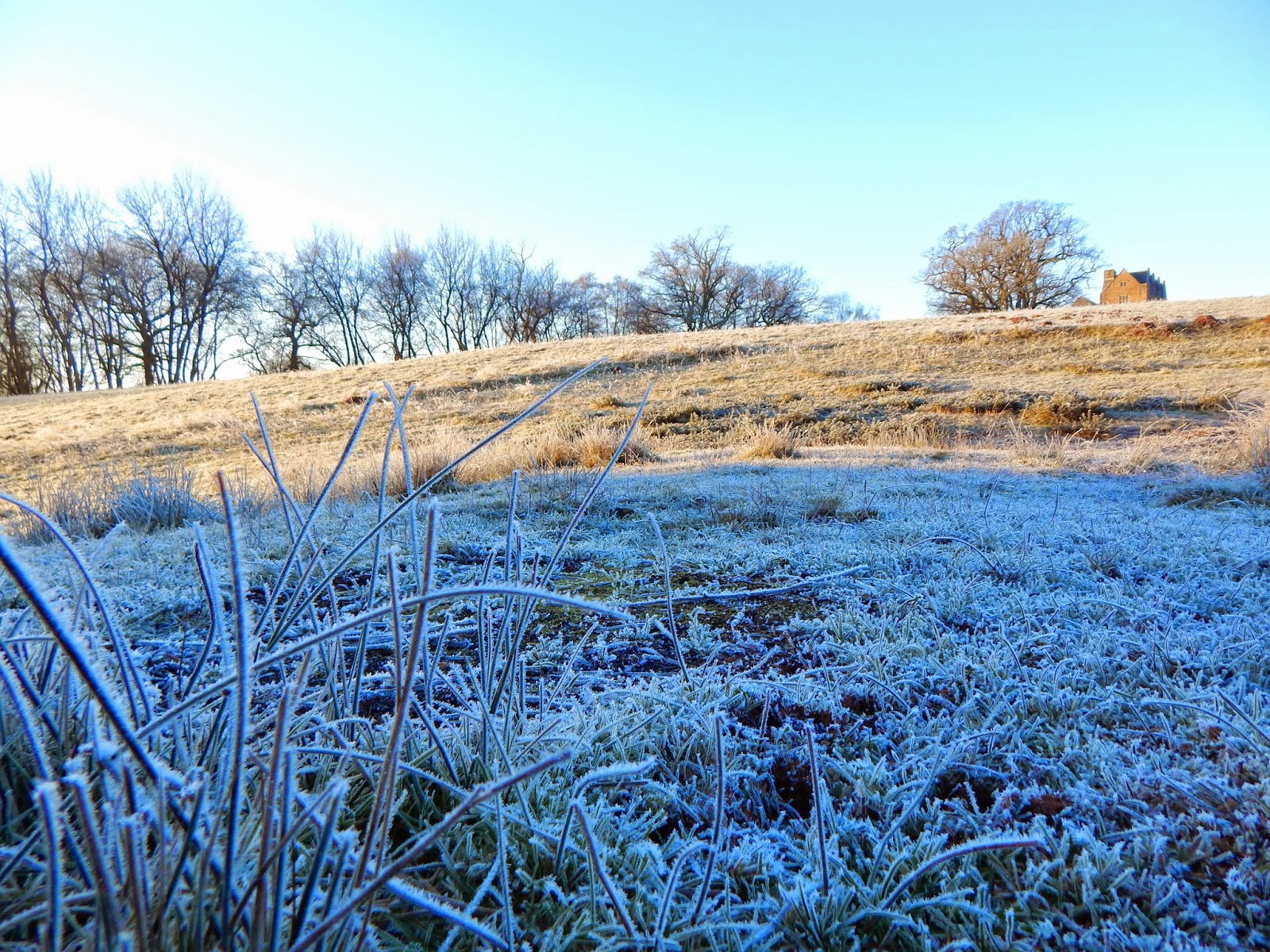
The windscreen was inevitably covered in a thick frost due to the temperature dropping to -3 during the night and my finger tips began to tingle as I scraped away at the ice. Back inside the van with heaters on full blast I shook my head and rolled my eyes as if to confirm I had finally lost the plot, surely I would of been better equipped with the pike gear instead of my carp gear loaded on board!
I had decided on a winter carp campaign back in the autumn and had been trickling bait in over the past few months on a little and often basis in the hope that the bait would keep the carp feeding in certain areas of the lake.
The ground was hard under foot as I made way across the sloping field, crunching with every step. As I approached the lake it was clear that at least half was covered in ice, limiting my swim choice immediately however one area of the lake I had been baiting was ice free so this would be by first line of attack. It is a snaggy area with over hanging foliage, underwater branches and a good depth, perfect sanctuary for winter carp. Such areas provide the carp with a feeling of safety especially at this time of year when the clarity of water is greater.

The second rod was positioned in the only other possible area not affected by the ice, in open water, rigs were as described in my previous posts and just 4 boilies were placed around the hookbaits. In these conditions I am normally fishing for one bite at a time, in the colder weather the carp does not digest its food as quickly as it does in the warmer months, so just a very small amount of bait allows the carp to feed but not over feed and ruin my chances of catching.
The rod cast towards the snags had only been in the water 10 minutes before the bobbin shot off the ground and the alarm let out a short scream, I struck and played my first fish of the day before the hook pulled after about 30 seconds. It felt a reasonable fish and I was gutted to say the least, you dont normally get many chances in these conditions however it was a confidence boost and hopefully a good sign that the fish were willing to feed.
When carp fishing whatever season it is, it pays to be vigilant, watching both the water and your rods, dont always rely on the bite alarm to inform you a carp has taken the bait.
The alarm had not come into play by the time I struck into my next fish. I noticed a knock on the rod tip followed by the line twitching and slowly pulling to the left, instinct told me to lift into it and soon I had my first winter carp of the season on the bank, a spirited common around 5lb. Not big, however a bend in the rod in freezing conditions.
The next fish fell to the same rod within half an hour, about the same stamp as the first. When the temperatures drop severely, carp and other fish tend to be more dormant, move around a lot less and in some cases attract leeches or parasites which im sure weve all seen from time to time. Some anglers prefer to remove them, in doing so can leave a small open wound which is vulnerable to infection. I tend to leave the leeches alone, it is a course of nature and the carp will knock them off when they become more active.
By lunchtime I had 2 fish under my belt, with the sun shining brightly casting long shadows across the field the ice faded away from the main area of the lake giving way to a mirrored surface. I felt that the second rod was fishing in "no mans land" and could now reposition it into an area at the bottom of a shelf on the edge of the shallow water and the remaining ice.
I topped up both swims with half a dozen boilies and enjoyed the warmth of the sun. The frost clung to any area that the sun did not reach and the maximum temperature all day was only 3 degrees. I believe my chances on this very cold day were helped with 2 key factors.
Firstly although the temperature got down to -3 that night, it was not a sudden change in temperature. It had been cold both day and night for the preceding 3 or 4 days prior to me fishing, giving the carp time to adjust to the freezing temperatures. If it had suddenly became cold overnight my chances would of been greatly reduced as the shock would of briefly interupted the carps feeding patterns. Secondly my prebaiting had probably kept the carp feeding over the last couple of months in certain areas of the lake, which kept the carp visiting these areas in search of food. I would encourage any angler to put a bit of time into prebaiting whether it be a lake or river, done sensibly, little and often can increase your catch rate over a prolonged period of time.
To demonstrate this, the second rod burst into life within an hour of being on the the prebaited area the biggest carp of the day made its way towards the far bank hoping to reach the sanctuary of the overhanging trees. It was a strong powerful fish that fought well, with a few heart stopping moments as the line came into contact with the surface ice I was sure it would cut through it. As I heaved the fish up the bank it was clearly a double and the scales went to 11lb 4oz.
I managed another around the 5lb mark resulting in 4 carp and lost 1. A good result in freezing temperatures and a lake half covered in ice! As I wrote in my previous posts I choose my winter venues carefully, I prefer to catch fish rather than sitting for weeks on end biteless, that is not how I want to spend my winter. These fish are not huge however this venue is still bit of an unknown quantity as far as the stock is concerned so it could throw up a nice surprise.
Ill keep adding the bait little and often which will hopefully see me land a few more winter carp.